
ELEC-F Concept
Used:



Group project done in Year 1 Semester 2. Uses M5Stack Fire V2.7, coded in block programming on the M5Stack UIFlow application, which then can be converted to Python. My teammates' names are Abel, Braven, and Yong Rui.
Youtube Video Link: Here
Hackster.io Link: Here
Youtube Video Link: Here
Hackster.io Link: Here
The main goal of this project was to create a safety system for workers when they use freezers in smart factories. This is done by preventing them from getting stuck, or providing reassurance if they do.
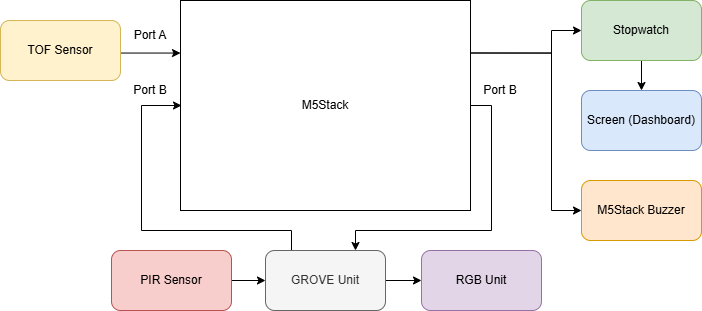
The system itself is very simple, consisting of just a ToF and PIR sensor, an RGB Unit, and a GROVE Unit (port extension).
The system itself is very simple, consisting of just a ToF and PIR sensor, an RGB Unit, and a GROVE Unit (port extension).
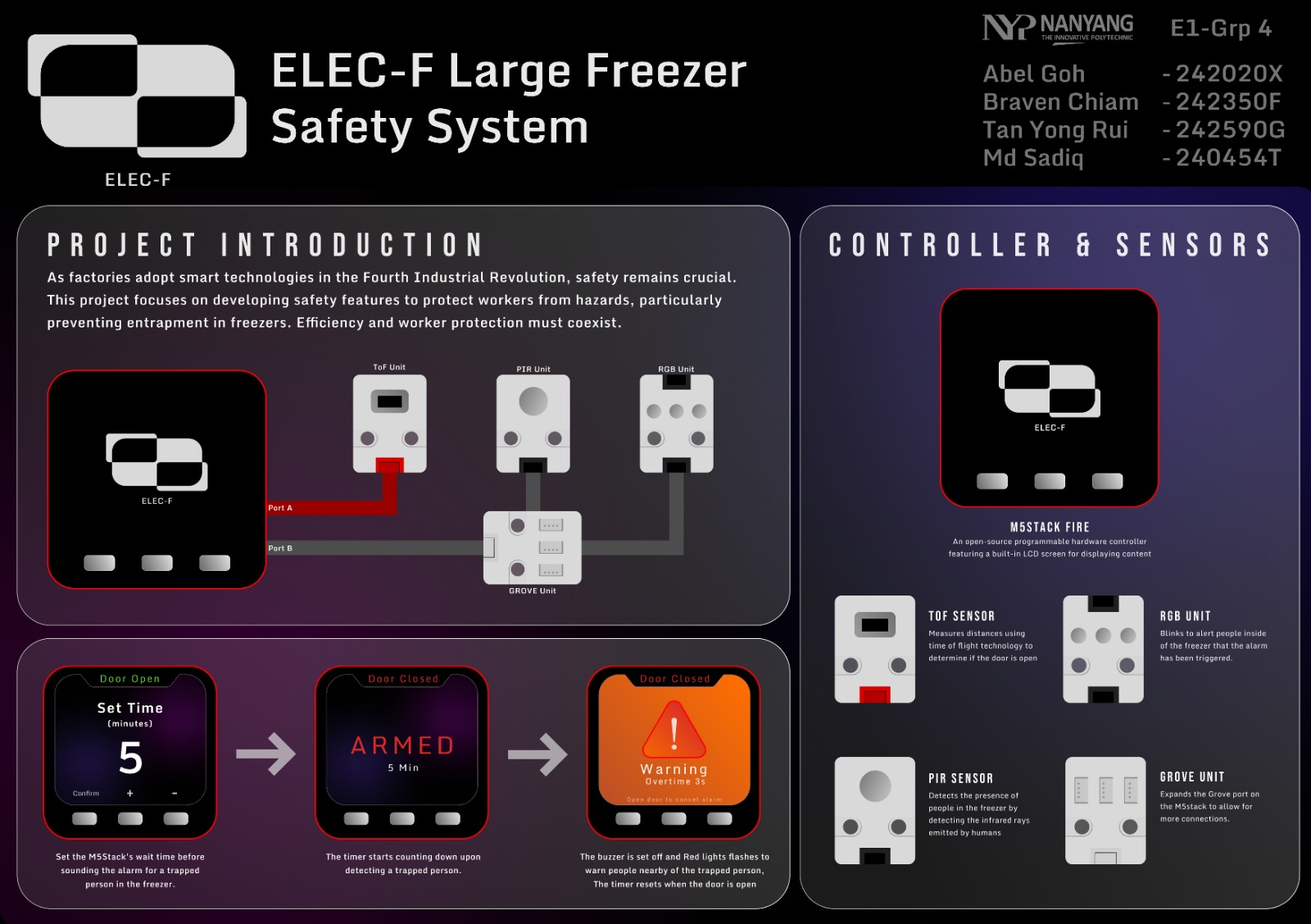
For illustrations and videography, Braven mainly did them. Below are some graphics used in our system as well as a poster for easy visualisation of our project.
Main page, for setting time limit of freezer usage:
Main page, for setting time limit of freezer usage:

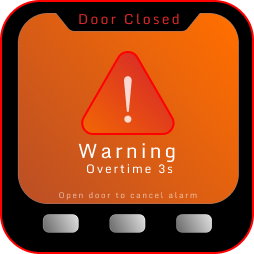
When freezer is in use:

When exceeded time limit:
Project poster:
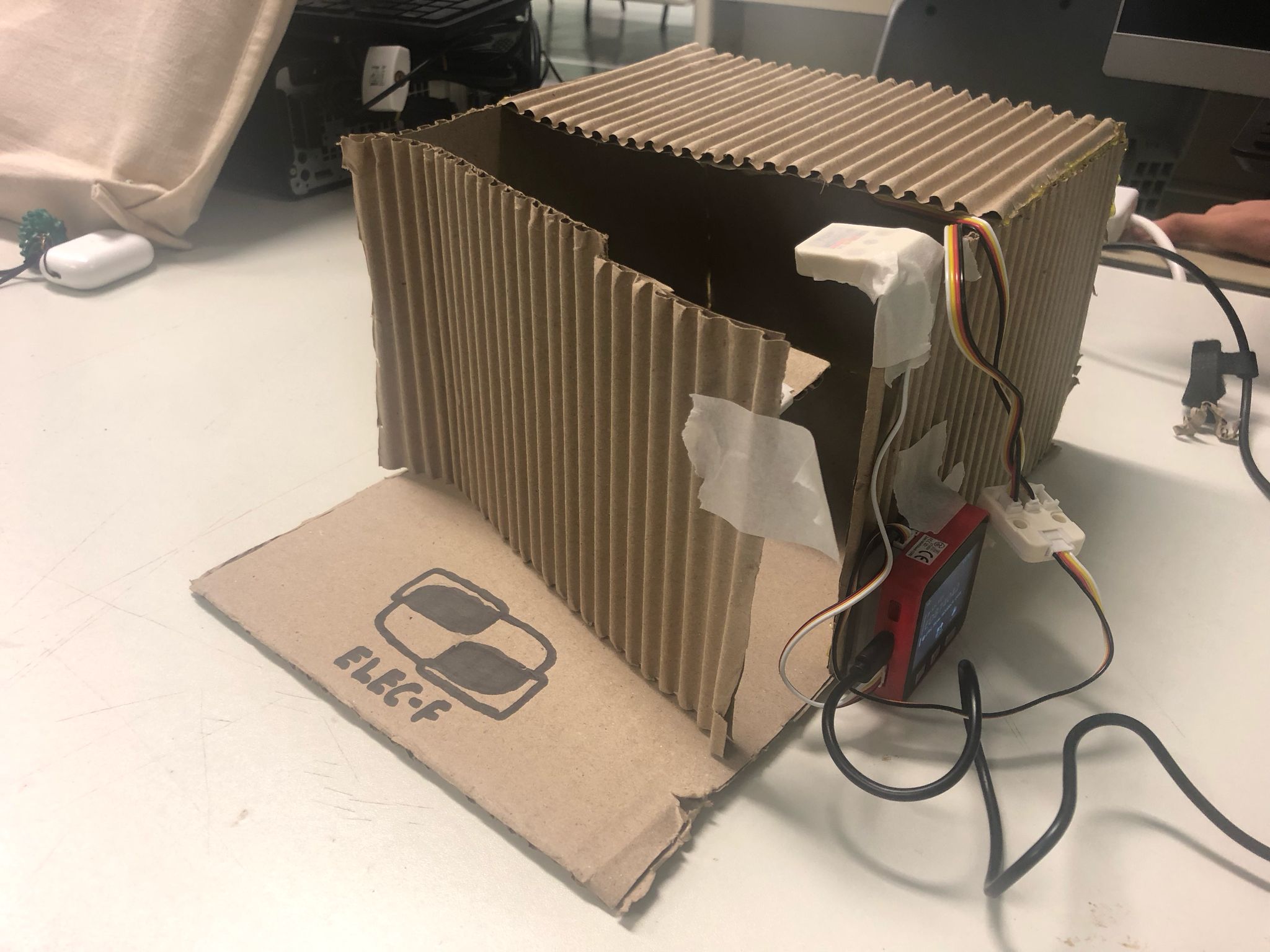
Abel and Yong Rui were the ones mainly responsible for building the project prototype. Here are some pictures of our prototype:
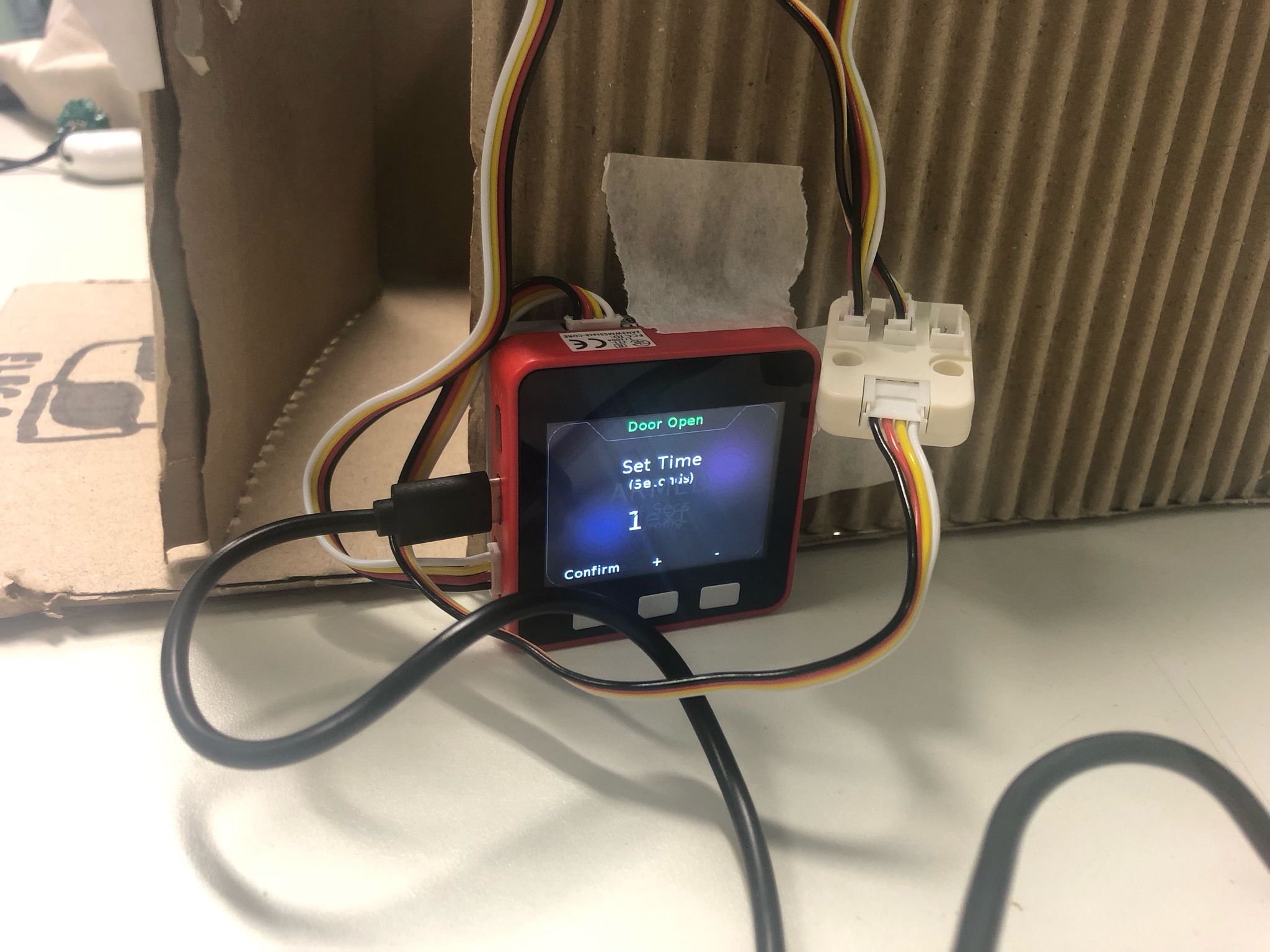
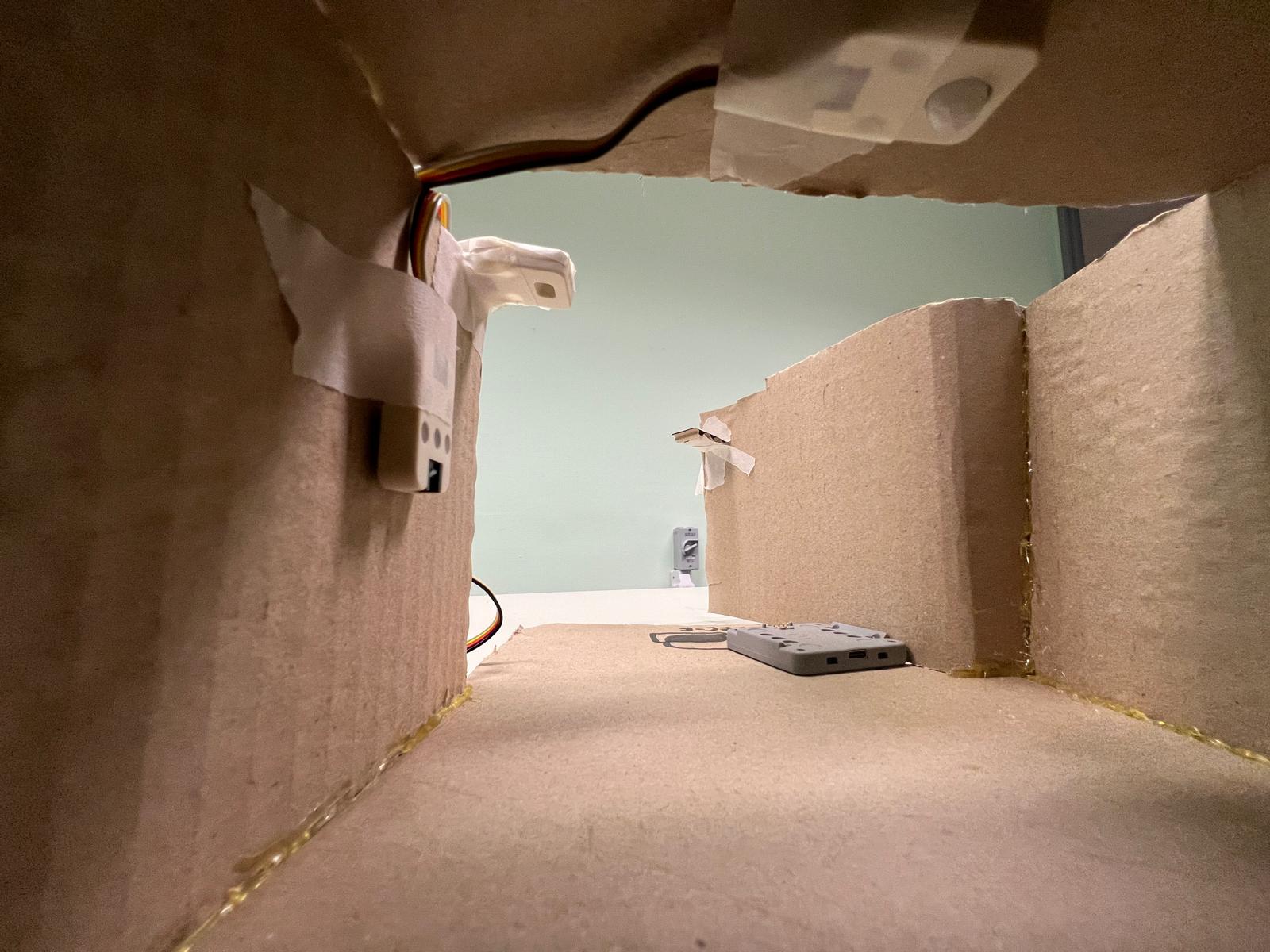
Finally for me, I was the main programmer for the project.
The Python code is available for download and reading here. Or you can see the code at the bottom of the Hackster.io page.
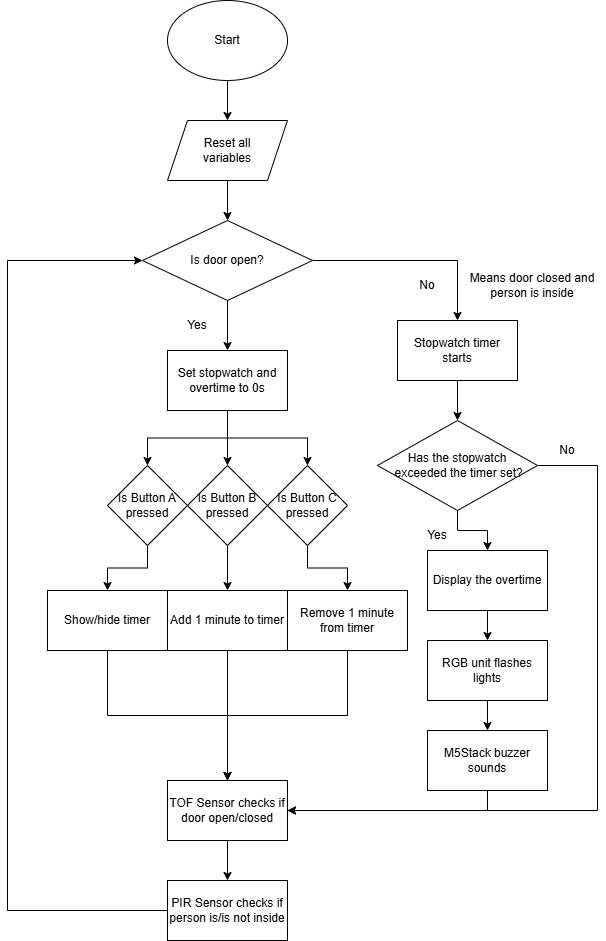
As I was responsible for the flow of logic in the code, I designed the block diagram and flowchart.
The Python code is available for download and reading here. Or you can see the code at the bottom of the Hackster.io page.
As I was responsible for the flow of logic in the code, I designed the block diagram and flowchart.
Challenges faced and lessons learnt:
1. Finding a problem and conducting research. This was slightly tough as we needed to find something we can improve upon in a smart factory and provide sufficient research and sources for it. We learnt that having good research is important.
2. Logic in block programming. There were a few times where the code did not execute in the order I was expecting as it was coded with blocks. After experimenting with flag variables and rearranging some things, it worked. Learnt that some things just need a bit more thinking.
1. Finding a problem and conducting research. This was slightly tough as we needed to find something we can improve upon in a smart factory and provide sufficient research and sources for it. We learnt that having good research is important.
2. Logic in block programming. There were a few times where the code did not execute in the order I was expecting as it was coded with blocks. After experimenting with flag variables and rearranging some things, it worked. Learnt that some things just need a bit more thinking.